

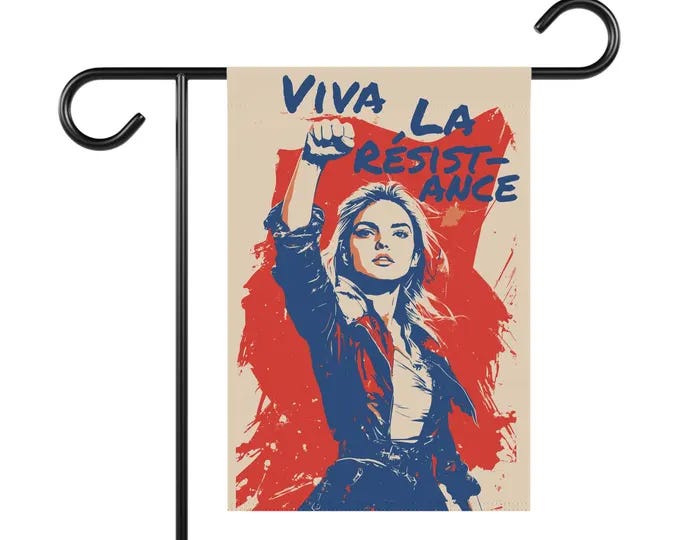
According to social psychologists, the cardinal law of human nature is the need to belong, making a sense of community essential to our flourishing.
I have reason to doubt this generalization, based on the one specimen of human psychology I have ever been permitted to examine from the inside: myself. When I feel a community’s arms closing around me, my instinct is not to relax into the embrace. It’s to look for the nearest exit.
I was born into a community that was not chosen—at least not by me, whatever its own sense of chosenness. I went to an all-girls rigidly Orthodox Jewish high school, which I detested and from which I played as much hooky as I could, which was a lot. The school didn’t pay all that much attention to my spotty attendance. Most of the girls were only biding their time until they got engaged. I, too, got engaged while in high school, and, although already an atheist, my first marriage meant I would remain, at least performatively, associated with the Orthodox community for many decades.
My husband and I lived in an Orthodox enclave of New Jersey, my children attending the local yeshiva. I kept the rules insofar as they affected other people, since there were people who took the rules seriously who needed to be able to trust me.
That religious community, demanding so much of my outward behavior, wasn’t the only one from which I’d felt alienated. The academy had beckoned to me as the place I’d feel at home, but that hope proved illusory. I got a PhD in philosophy, got a good job straight out of graduate school and loved teaching. But the community of analytic philosophers was almost as clannish as the religious community I knew so well, displaying its own sense of chosenness. Once again I found myself looking for the exit.
I’d varied writing philosophy with publishing novels, which offered me another community to try on for size. It didn’t fit. Nothing makes me feel more like the analytic philosopher I was trained to be than spending too much time with novelists.
I waited until both my parents died before officially leaving the Orthodox community while also leaving my marriage. Post-divorce, I published two books, one on Gödel’s incompleteness theorems and one on Spinoza. It was the Spinoza book that introduced me to an entirely new community. Having spent so much time in organized religion, I was now introduced to organized non-religion.
I was surprised by how many such organizations there were, and many of them gave me awards, thanks to the Spinoza book. This was during the time when the “new atheists”—Sam Harris, Richard Dawkins, Christopher Hitchens, Daniel Dennett—were riding high, each having published a bestseller. In fact, one of my prizes, given by the Center for Inquiry, was The Richard Dawkins Award.
It was a great relief, after the decades of outwardly belonging to a religious community whose beliefs I didn’t share, to be able to freely speak my mind. Another of my awards, this one given by The Freedom From Religion Foundation, was designated The Freethought Heroine.
Did I deserve such an award when for so much of my life I’d hidden my ideas out of a (perhaps misguided) sense of responsibility to others? Well, I told myself, I always had practiced, in the privacy of my own mind, freethought. It was just the expression of my thoughts that had hitherto been suppressed.
But wouldn’t you know it? I soon found myself at odds with the community of non-believers—or at least with the attention-attracting subset of them who had gone on the offensive against religion and spirituality of every kind, even the most innocuous. It’s one thing to assert that a person can be good without believing in God, with which I couldn’t agree more. But to suggest that believers are soft in the head doesn’t do justice to the varieties and complexities of religiosity, and I found myself writing a novel that tried to express some of the varieties and complexities. Then I wrote a book about Plato and the ancient Greeks’ development of philosophy in the context of the Axial Age. The existential dimension that emerged during the Axial Age, roughly 800-200 BCE, provoked the many religious traditions that persist to this day. But the ancient Greeks, although they had a religion, didn’t apply it to the Axial Age’s quest to find meaning in life. Instead they turned to reason.
Soon after came the pandemic, the extroverts suffering from the enforced isolation, while we introverts had an easier time of it. I could forget all about belonging to any community and concentrate on writing a book that argues that, in addition to social mattering, which concerns our relationships with others, there is existential mattering, which concerns our relationship with ourselves.
Post pandemic, my relationship with organized non-religion seemed to have lapsed, or maybe it was organized non-religion that had lapsed.
But then, a few months ago, I got an invitation from Humanists International to be a keynote speaker at the World Humanist Congress 2026. The description of the theme called out to me: Humanism as Resistance. “We are living,” read the description, “in an era of resurgent authoritarianism, escalating religious nationalism, and the aggressive spread of anti-science disinformation. The 2026 Congress is explicitly focused on turning humanist principles into effective action and resilient strategies.” I felt every word of that summons.
The Congress, whose location was changed from Washington D.C. to Ottawa for sadly obvious reasons, turned out to be a great success, attracting humanists from 41 countries. There were interesting talks and inspiring people. I met secular humanists coming from countries where the label exposes you to the dangers of pariah status, assault, arrest, and even death: Turkey, the Philippines, Malaysia, Pakistan.
I gave the opening address, and the response of the audience warmed some part of me I hadn’t known was there to be warmed. I had many requests to publish the talk, and I’ve decided to do so here. That will be Part Two of this edition.
Because I know my usual inclination is to look for a means of escape, I’d booked my flight to leave Ottawa before the Congress ended. But then the weirdest thing happened: I hated to leave.
Viva la Résistance: Part Two
Humanism has the goods to remake the world. How do I know this? Because it did so before and in circumstances even grimmer than what we’re facing today.
What we’re now facing is the erosion of institutions that were painstakingly, over the course of centuries, shaped and reshaped by humanist values: institutions of democracy and the rule of law, of scientific inquiry, of public education and universal literacy, of the free press, of civil liberties and human rights, of international cooperation, of health and sanitation, of labor protections and social welfare. I could go on.
All of these institutions were established on a conviction that lies at the core of humanism: that humans, every single last one of us, morally matter and exactly to the same degree, and that this mattering doesn’t depend on bloodline, creed, or permission from a throne or altar; that the right of all humans to flourish in the unfurling of their possibilities can be defended on purely secular grounds—by appeal to our capacity for self-reflection and our ability to give reasons and to listen to them, assess them and act on them, reasons that we can all, at least in principle, examine and share, thereby binding ourselves to one another in a commonality of purpose aimed at the common good. This is the core of humanism out of which were constructed the institutions threatened today.
They may not have used the word “humanism,” but humanism was what they were appealing to, just as surely as the Bourgeois Gentleman in Moliere’s play, Monsieur Jourdain, was delighted to learn that he had been speaking prose all his life.
These institutions did not descend from heaven. They were not dictated by a sacred text. They were argued into existence, on the humanist conviction that we, and we alone, are responsible for ourselves and for one another, that human life is— yes and alas— finite but nevertheless infinitely precious and bursting with creative possibilities. All of these: humanist convictions.
So it is that we watch, in disbelief, in grief, these institutions under assault, hollowed out by corruption, captured by the cynical power-hungry who parade as populists, whipping up irrationality and weaponizing resentment, some of it justified resentment of institutions that fell short of what they were meant to do in service of humanist ideals and so in need of improvement—humanist improvement.
It’s tempting, in such a moment, when displays of irrationality and gullibility, cynicism and malice, are played out in an ever-running loop, to imagine that the whole humanist project was naïve, that we were foolish to believe humans could ever govern themselves by reason and compassion rather than by fear and domination.
But to understand the vast power of humanism as resistance we have only to recall the time before any of these institutions existed at all, before there were democratic systems of government that gave us, the people, voices and choices, before there were epistemic systems for discovering the laws of nature that gives reality itself the means to answer us back when we’re getting it wrong—another name for which is science; before it was even thinkable that all humans have the same right to a life of maximum flourishing and that ethics need not lean on the dubious commandments of a deity who, like the worst of parents, picks his favorites. There was a time when to suggest that morality did not depend on the will of such a God was not just controversial but dangerously, even fatally, blasphemous, punishable by death. And yet somehow in the midst of such bleak circumstances, the means of resistance took shape, and that means was humanism.
Let’s go back briefly to that time. Go back to a small attic room in the Hague, where a young man, excommunicated by his own persecuted religious community of Jews, only to be reviled by greater Christian Europe, sits grinding lenses by day, earning his living from fragile glass while far into the night he writes words that could shatter empires. His name: Baruch Spinoza. And in a world where authoritarianism and religious nationalism were absolute, where the church and the state marched arm in arm, the flames of the auto de fe still inflicting excruciating death to those suspected of deviating from the dogmatism du jour, this most marginalized of persons dared to imagine a different foundation for truth, for freedom, for the vastness of possibilities we hold within ourselves.
He dared to write a book entitled Ethics. Such audacity packed into that title, such sublime resistance to the theocratic insistence that we can’t possibly figure out on our own, by way of reason, the right way to live and to flourish, individually and collectively, using nothing beyond the laws of nature to guide us.
We are part of the natural world, insisted Spinoza, determined by its laws, which it is our profound privilege to be able to discover in all of their intricacy and elegance. We are, although finite modes in a vastness of complexity, yet something remarkable, both epistemically and morally.
Epistemically since it’s through us, part of the natural world, that nature possesses the potential to know something of itself. And morally, since our striving to persist, to flourish, to become more fully ourselves –to increase our power of acting, our capacity to understand and to love—this striving is the source of values in the universe, meaning that we, by our very nature, introduce values into the universe. We are creatures of matter who long to matter, and in our longing a fully naturalized ethics is born.
Joy, for Spinoza, is an increase in our power to act, and sadness is its diminishment. Ethics is about organizing our lives, our institutions, and our societies, so that we cultivate joy, understanding and mutual empowerment rather than suffer sadness, passivity, and domination through fear and ignorance.
This is our task as humans, and it calls for resistance. Existence itself, intuited Spinoza, demands resistance. He introduces this notion of resistance by way of his concept of conatus: the striving of each finite thing to persist in its being, a constant effort not to yield to the annihilation which would naturally occur without resistance.
This recognition of resistance as fundamental to ontology is extraordinary, considering that Spinoza lived at a time when modern science was only just beginning to get its footing, feeling its way toward the proper mixture of mathematics and observation that would yield us such rich knowledge of our world. Consider: Isaac Newton’s Principia Mathematica was only to be published in 1687, ten years after Spinoza’s death at the age of 44. And yet it’s almost as if Spinoza intuited that there was some aspect of the natural universe that makes existence itself a task of resistance.
We now know, thanks to the progress of science, how to name this aspect of the universe. Its name is entropy, which literally means transformation from within. Entropy is a measure of the disorder within a system. The second law of thermodynamics, which has been called the supreme law of physics by no less a figure than Albert Einstein and which was first formulated in the nineteenth century—that is, two centuries after Spinoza’s death—tells us that in closed systems, meaning those that don’t have recourse to external sources of energy—entropy—disorder—increases, overcoming internal structural order and so the functioning of the system until it ceases to be. As the saying goes, rust never sleeps. The increase of entropy is so inexorable that it yields us the direction of time. It also explains the essence of life.
Life, in all its forms, is a temporary and local reprieve from the entropic transformation from within. Living systems take in energy from their environment, in the form of food and sunlight, and energy-rich chemicals, and put this energy to work to resist—resist—the transformation from within, exporting entropy into the universe. In other words, life makes a mess—some lives more than others. The laws of biology are life’s response to the second law of thermodynamics, by means of which living things are able to maintain internal organization, repair damage, create complexity, holding off death and decay, for a while.
That while is important. That while is where humanism steps in. It’s where all the meaning lies, where everything worth living for lies, all of which require constant counter-entropic resistance. The notion of entropy—the constant in our universe, that makes existence itself a task of resistance—adds direction not only to time but to our moral lives. Understood in the right way, it helps us to further the project Spinoza had conceived at the very dawn of modern science that the laws of nature can guide us ethically.
In brief: We can align ourselves with forces that accelerate entropy—forces that produce confusion, ignorance, disconnection, deprivation, despair. Or we can align ourselves with forces that locally resist entropy, align ourselves with life itself in its struggle against entropy. And this gives us a strikingly naturalistic way to think about ethics. It provides our humanist convictions with objective grounding, far firmer than appeals to On High.
Flourishing equals counter-entropy. The default natural states are ignorance, poverty, deprivation, starvation, illness, decay, death. Our sense of flourishing and wellbeing—what the ancient Greeks called eudaimonia—is the successful attempt to resist, locally and for a while, the default natural states. Knowledge, clarity, cooperation, tolerance, peace, rationality, justice, happiness, love: all the things we humanists value—are all low-entropy states demanding counter-entropic, energy-requiring resistance.
The humanist institutions, developed from the conviction that human life and flourishing matters and that took centuries to perfect—institutions of justice, of science, of free access to information, of education, of cooperation, of democracy and the rule of law—these are all counter-entropic achievements, seawalls erected against the chaos that is always threatening to take over, like those seawalls that were so essential to the Netherlands in which Spinoza had lived. Like all counter-entropic achievements, these humanist institutions require care, renewal, vigilance, and endless energy.
So yes, as humanists, we must be committed to preserving these counter-entropic institutions, all of them meant to do justice to the equal mattering of all humans. And of course, as humanists, we must be equally committed to resisting the accelerants of entropy—social, political, and moral—that threaten these institutions.
This World Humanist Congress has named three such accelerants: Authoritarianism, religious nationalism, and anti-science disinformation.
The first two, authoritarianism and religious nationalism are blatantly anti-humanist, explicitly denying the equal mattering of all humans. Authoritarianism at its core is the political codification of unequal mattering, perfectly captured by George Orwell in Animal Farm, in the pigs’ revision of the cardinal rule, replacing “All animals are equal,” with “All animals are equal, but some animals are more equal than others.”
Authoritarianism strips us of our human agency and in so doing can’t help but diminish human flourishing; you either get with their agenda or you are the enemies within, in which case authoritarianism is quick to show its underlying brutality. Authoritarian systems demand not just obedience but a kind of moral anaesthesia. They require us not to feel the full significance of what is being done to the marginalized, the imprisoned, the silenced, the disappeared. From the standpoint of a naturalized ethics of mattering, this is not simply “another political option.” It is a systematic attack on the very conditions under which human beings can flourish: You are either among the powerful few or you bend your will to them in order to survive.
Religious nationalism is every bit as much a denial of the humanist ethics of equal mattering, particularly dangerous in the way it fuses transcendent appeals with tribal ones. It proclaims “our group, our faith, our nation has cosmic importance. Others are at best secondary, at worst enemies of God and of history.” It’s formidably effective in the ways that it manipulates our most powerful psychological levers—the need to belong, to feel ourselves righteous, to matter absolutely. I don’t think that, as humanists, we have to object to people’s spiritual lives per se. An aspect of humanism is recognizing and accepting the great diversity among us, and recognizing that for some a certain sense of spiritual mooring to their lives is essential to their flourishing. Tolerance for our human diversity ought, I think, to be part of our humanist ethics. But we must resist any ideology—religious or secular—that singles out a certain subset of humanity as the one that really matters, as religious nationalism so dangerously does.
The third entropic accelerant named by this Congress, anti-science disinformation, is more insidiously anti-humanist than the other two. Science is one of humanity’s greatest humanist achievements, a collective enterprise that says no single person, no single party, no single prophet has special access to the truth. Claims must answer to evidence, to open criticism, to the scrutiny of any inquiring mind, regardless of rank or creed. In principle—and sometimes even in practice—a lowly graduate student, like Enrico Fermi, or a lowly patent officer, like Albert Einstein, can challenge the reigning scientific theory. Science is the laborious cultivation of a characteristic that doesn’t come naturally to us, namely epistemic modesty, our recognition that reality doesn’t bend to our wishful fantasizing but must be allowed to answer us back and that we show our respect to it and to one another by being willing to have our beliefs tested against the world we share.
Anti-science disinformation doesn’t merely raise questions out of healthy skepticism. It aims to dissolve the very standards by which we can objectively agree on the answers. It replaces the hard humbling work of evidence and argument with manufactured doubt, conspiracy and the flattery of “secret knowledge.” It tells people that expertise is just another opinion, that facts are just weapons in someone else’s culture war, that every account of reality is nothing more than the mask of a hidden agenda. And once that story takes hold, what’s left? If there are no publicly accessible standards by which to distinguish a warranted belief from a comforting fiction, then the only thing left standing is brute power: the loudest microphone, the largest troll farm, the most efficient propaganda machine.
From a humanist perspective, this is catastrophic, opening the way for authoritarianism and ideology to have their way with us.
So when we defend science as humanists, we’re not worshipping a new idol or pretending that scientists are infallible. We’re defending a set of norms—public evidence, reproducibility, peer criticism, revisability—that make it possible for fallible creatures like us to converge, however slowly and imperfectly, on truths that matter for everyone—for example, the second law of thermodynamics. Anti-science disinformation is an enemy of humanism not only because it blocks the application of science to promote human flourishing, but because it seeks to destroy the very conditions under which truth can be a common good rather than a prize seized by the powerful. And without shared norms of truth-gathering, the equal mattering of all persons becomes, at best, an aspiration we can no longer effectively act on, and at worst, a slogan to be manipulated by those who have already decided that only some of us really count, in George Orwell’s telling, the pigs.
Let me pause for a brief moment to consider the United States of America. I know that this is an international humanist congress, but I think we can all recognize that the United States has played, or at any rate, once played, a singular role in the development of counter-entropic institutions. We recently observed the 250th anniversary of the Declaration of Independence, which contains an extraordinary sentence. I don’t mean the one that’s usually quoted, to wit: “We hold these truths to be self-evident, that all men are created equal, that they are endowed by their Creator with certain unalienable Rights, that among these are Life, Liberty and the pursuit of Happiness.” That one is good so long as you add the necessary humanist qualifications, changing “all men” to all humans and striking out “endowed by their Creator,” a phrase that Spinoza had demonstrated a century before the American Revolution to be unnecessary. No, I mean the sentence that followed that one: “That to secure these rights, Governments are instituted among Men, deriving their just powers from the consent of the governed.”
Here is a coordinated resistance—a revolution—seeking to justify itself by asserting that the legitimate grounds of government rest on a counter-entropic move: a rational social contract meant to secure the equal mattering of all. This is an inflection point in history, a nation state founding itself on such a counter-entropic conception of justice, resisting the natural course of history, in which power—gained by war, by inheritance, by mythologies of divine rights—determines the hierarchical order and rights of its citizens.
The irony is that this historical inflection point was being celebrated while the U.S. government is in the grip of leaders whose views and actions run precisely counter to this counter-entropic notion of government—a president whose petty whims, gargantuan greed, and indifference to truth is increasing entropy not only in the United States but around the world, and a vice-president so hypocritical and opportunistic that it’s hard to discern what he believes, but who seems to be sincere in his blood-and-soil nativism. As I said: Life makes a mess—some lives more than others.
If ever we needed proof that humanism is the very lifeblood of the institutions presently under attack—our institutions of justice, of democracy, of truth-telling, of education, of cooperation, of health and social welfare—then that proof is definitively provided by seeing how contemporary movements of authoritarianism, religious nationalism, and organized disinformation are seeking to dismantle these very institutions. Again to repeat: justice, knowledge, compassion, fairness, cooperation, rationality, health, abundance, happiness, flourishing: these are all states of low entropy, requiring resistance against the natural order of things—or rather the natural disorder of things—which is exactly why these institutions are so necessary to do the counter-entropic work of resistance.
And this means that, given our present moment, our humanist alliance against entropy has a distinctly political shape.
It means resisting authoritarian attempts to rank and restrict whose lives matter.
It means resisting religious nationalism’s intent to sacralize some identities and sacrifice others.
It means resisting disinformation’s corrosion of our shared reality.
And at the very same time, it means:
Defending and deepening democracy as an institution of equal mattering.
Standing with those whose mattering is under attack—minorities, migrants, immigrants, dissenters, the poor.
Challenging narratives that portray entire groups as threats, parasites, or “humans mattering less than.”
Supporting all forms of objective fact-finding, whether in scientific labs, universities, the press, the media.
Designing policies and institutions so that more people can genuinely participate, not just symbolically appear.
These are political tasks of resistance that, given this moment in time, our humanism thrusts on us.
But there is more, I think, less political in nature. And let’s face it. The task of restoring our old institutions, arguing for their importance, which strikes many as just arguing for the status quo, isn’t terribly exciting to masses of people. It doesn’t inspire movements. And excitement and inspiration is what we require at this moment. We have to put our collective minds to strategies of inspiring and exciting, because the authoritarians and the religious nationalists know so well how to inspire and excite, making people feel that they belong, that they matter, that they’re part of something greater than themselves. It’s so much easier for them since they aren’t tied to standards of truth as we are. They can make up any bullshit that serves their purpose. Pure reason is wonderful. Science is wonderful. But not everybody gets off on logical proofs and the spine-tingling elegance of the laws of nature.
So we have to call on all of our talents, including the arts, reach deep into the sources of our creativity to produce narratives that provide a sense of belonging and mattering, feeling connected to one another and to something larger than oneself that the accelerants of entropy know so well how to produce.
We have to think of ways of inviting people into projects—scientific, political, artistic, civic, educational—in which their efforts genuinely make a positive difference. This isn’t propaganda. It’s the real work of building a social and political and moral world worth inhabiting, which means resisting social, political, and moral entropy.
Finally, resistance is not only grand gestures or public campaigns. It’s also the texture of our daily choices. Every day we face temptations to seek mattering in ways that increase entropy: By humiliating others, trying to win arguments by making others feel stupid. By spreading outrage instead of understanding. By giving up on conversation in favor of slogans. By letting cynicism erode our willingness to care. A humanist ethics, asking us to reduce social, political, and moral entropy, would have us always acting in ways that add clarity, kindness, and tolerance to our local corner, rather than more noise and fragmentation. None of this is glamorous. Much of it is quiet and unrecognized. But this is how low-entropy moral structures are built and maintained: by countless acts of patient, disciplined resistance to the natural slide into chaos.
What matters is not whether our achievements will last for eternity. They won’t. What matters is what happens to the beings who share this finite window with us:
Whether they live or die.
Whether they flourish or suffer.
Whether they’re educated or imprisoned in ignorance.
Whether they’re treated as full persons, with agency and rights, or as mere statistics to be managed.
These aren’t trivial differences. They are enormous in the lives of all, just as we each experience these differences as enormous in our own lives. To act humanistically is to care about those differences without requiring that they be inscribed in the fabric of eternity.
This is hope without illusions: not the hope that everything will be fine, but the hope that our choices now can make real differences to real beings—and that this is enough to ground a life and an ethics worth committing to.
We can’t promise final victory. We’re scientifically-grounded realists. But we can promise this: that we will not be passive conduits of chaos, callousness, and cowardice. We will be, instead, however locally and imperfectly, creators and protectors of meaning, allying ourselves with life’s own resistance to entropy. We will use our brief, precious, improbable existence to push back—against degradation, against ignorance, against suffering and despair—and to expand, wherever we can, the space in which all humans, other species, and our planet itself, can flourish together.
Viva la resistance!
I’ve been thinking about this question quite a bit lately, and I’m not sure the need to belong necessarily requires the desire to belong to a conventional community.
I wonder whether part of the difficulty is how broadly we define belonging. Someone can resist groups, institutions, movements, and even the expectations that come with community while still having a handful of relationships, intellectual connections, places, traditions, or even conversations that quietly perform the same function.
That makes your question at the end especially interesting to me. If someone believes they have flourished without community, does that actually challenge the idea that humans need belonging? Or does it suggest that we sometimes fail to recognize belonging when it doesn’t look like the version we were taught to expect?
There’s also something fascinating about resistance itself. Defining yourself against a community still places that community somewhere in the architecture of your identity. You may reject its membership, but it remains part of the landscape against which you understand yourself.
Really enjoyed this. Your final question is one of those that becomes considerably harder the longer you think about it.
Ah, the life-long hunt for a suitable community! I love the way your essay touches (and goes deeper into) the whole idea and what that means for those of us who never felt we quite fit into the usual sorts of communities. Oddly, your search is a tiny bit reassuring to me, because if you, such a brilliant essayist, with your amazing way with words and the honors bestowed on you, haven't had an easy time of it, well, then my own efforts don't mean I'm hopeless. My hunt may be, but I'm not. So thank you, again, Rebecca.